
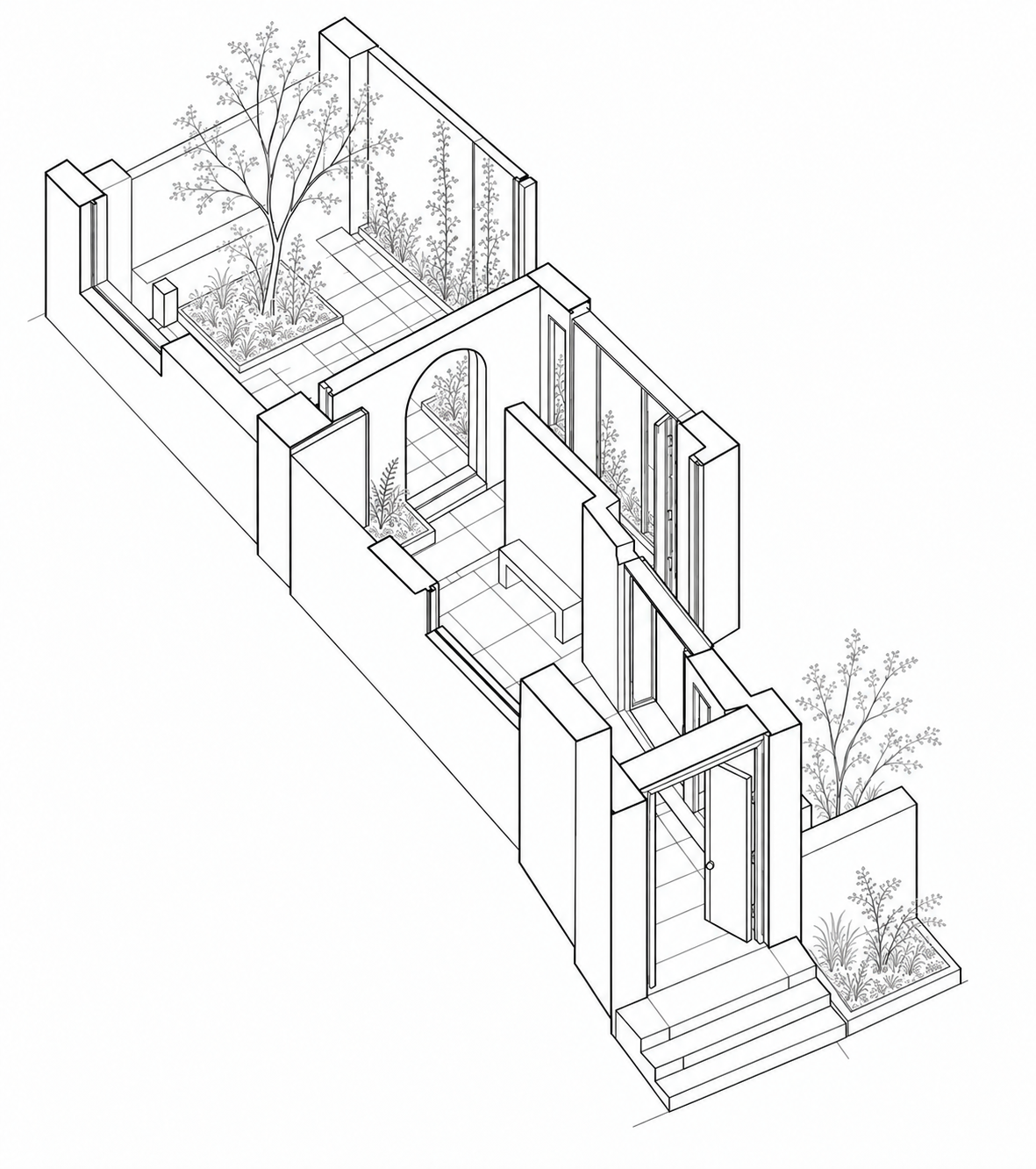
阈限(门槛)何以成为一种过渡空间的建筑操作,而不只是两个空间之间的分界线?
我以空间分析与建筑现象学研究阈限,结合文字与图纸,对读欧洲和中国的建筑案例,以人的感受为重点,考察空间之间的衔接。
FILARCH 2026 · 从墙到阈限
2026年11月20日,伦敦建筑联盟学院
图解 · 能指与后能指符号体制
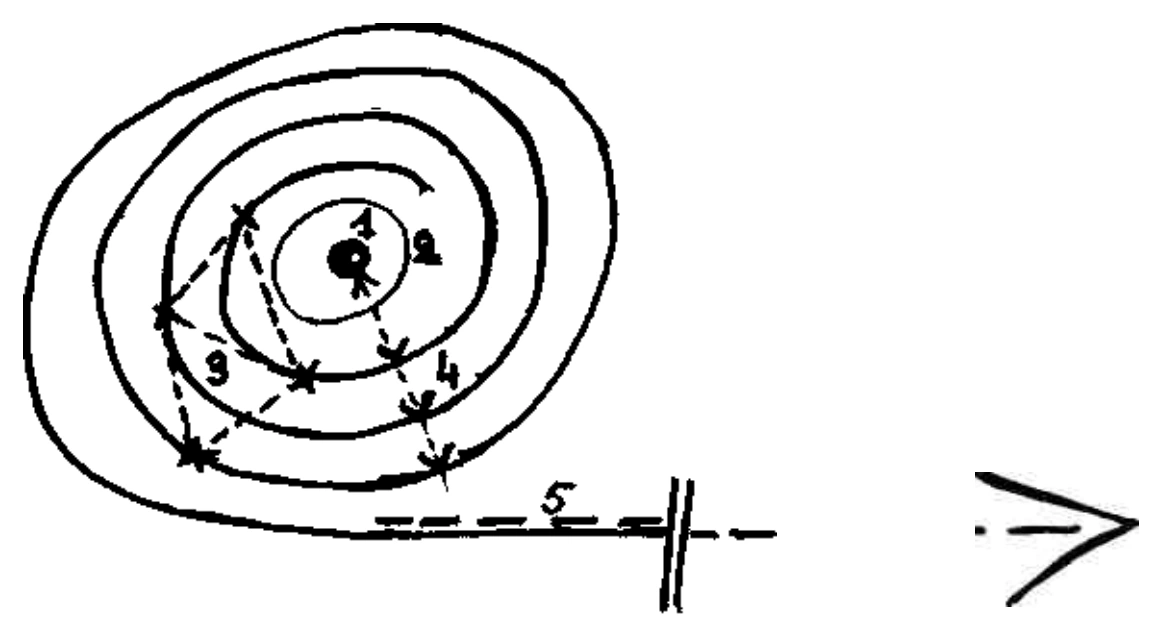
图中的中心是能指,同心环表示符号在环内及环间的指涉。向外的虚线遇到截断,表示逃逸线在这一体制中受到阻隔。
Gilles Deleuze and Félix Guattari, “587 B.C.–A.D. 70: On Several Regimes of Signs,” in A Thousand Plateaus: Capitalism and Schizophrenia, trans. Brian Massumi (University of Minnesota Press, 1987), 135.
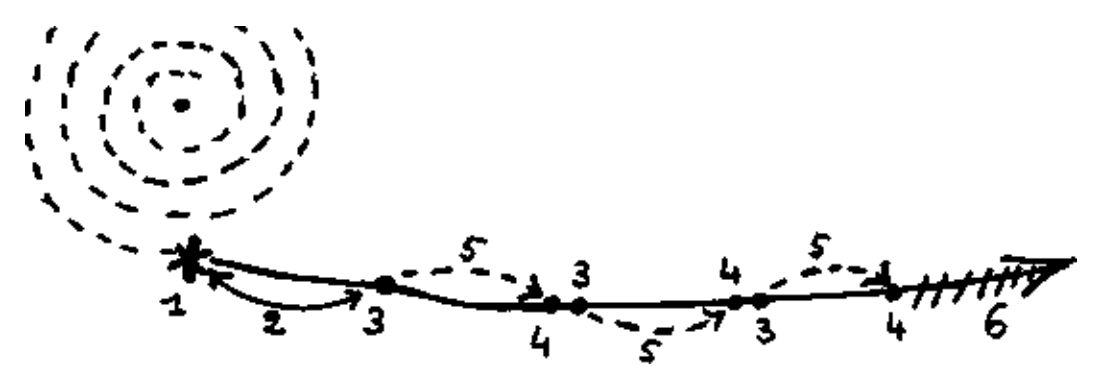
在后能指符号体制中,主体化之点取代了能指中心。向外延伸的线经由一系列有限的段落推进,沿途仍有阻隔。
Gilles Deleuze and Félix Guattari, “587 B.C.–A.D. 70: On Several Regimes of Signs,” in A Thousand Plateaus: Capitalism and Schizophrenia, trans. Brian Massumi (University of Minnesota Press, 1987), 137.
第一张图表现符号怎样回指中心,第二张图表现一条线怎样离开圆环,沿一系列区段推进。把它们与《回旋曲》对读,可以追问重复在做什么:哪些重复维系既有关系,变化又在什么位置使新的联系成为可能?
《1837:论回旋曲》全章导读
全章导读。下列分段沿用布赖恩·马苏米英译本的印刷页码。三处短引文并列法文原文、马苏米英译和本站中译。
311–313
Un point d’appui dans le noir
La chanson de l’enfant donne un rythme à ses arrêts et à ses pas. Les auteurs rapprochent trois gestes qui peuvent coexister : trouver un centre, tracer un cercle habitable et l’ouvrir.
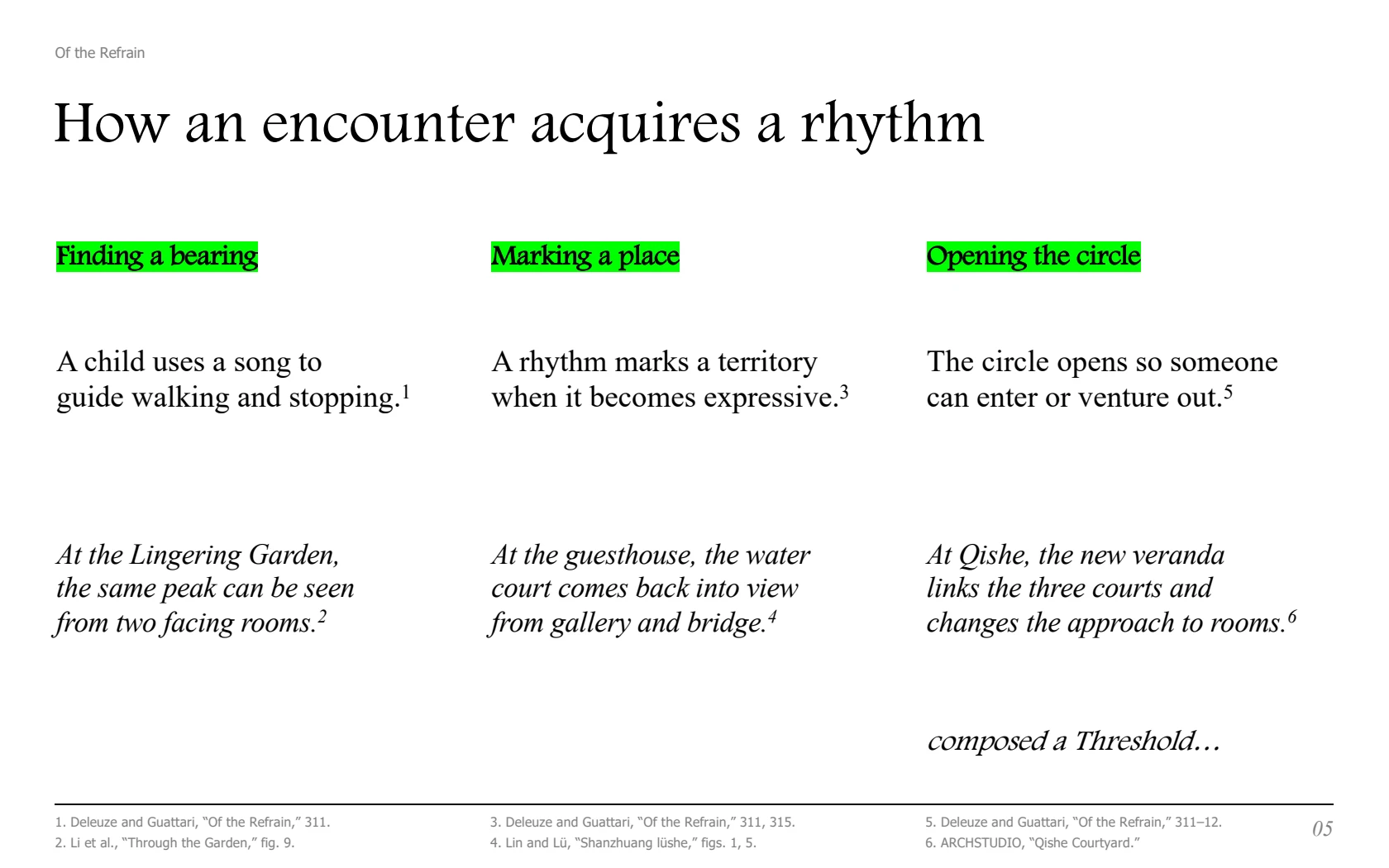
Finding a bearing in the dark
A child’s song gives shape to walking and stopping. The authors bring together three gestures that can coexist: making a centre, drawing a habitable circle and opening it.
黑暗中的立足点
孩子用歌声给停步与行走定出节奏。作者并置三种可以同时发生的动作:找到一个中心,划出可栖居的范围,再把这一范围打开。
314–317
Des milieux au territoire
Des rythmes se forment au passage d’un milieu à l’autre. Une couleur, un son ou un geste qui acquiert une portée expressive peut marquer un territoire.
From milieus to territory
Rhythm takes shape in passages between milieus. A colour, sound or gesture can mark a territory once it acquires a distinctive expressive reach.
从环境到领地
节奏产生于不同环境的交接处。色彩、声音或动作取得可识别的表现力以后,便能标示领地。
318–323
Motifs, contrepoints et distance
Les motifs et les contrepoints font varier les rapports entre les marques d’un lieu et ce qui l’entoure. Les chants et les postures règlent ainsi des distances et des moments de rencontre.
Motifs, counterpoints and distance
Motifs and counterpoints vary how the marks of a place relate to its surroundings. Calls and postures regulate distance and the timing of encounters.
动机、对位与距离
动机和对位改变场所标记与周围环境的联系。叫声与姿态可以调节彼此的距离,也可以改变相遇的时机。
324–337
Des agencements qui se recomposent
Une activité installée dans un territoire peut se détacher et se recombiner ailleurs. La consistance désigne la manière dont des éléments hétérogènes tiennent ensemble à travers ces changements.
Assemblages that change
An activity established within one territory can break away and enter another assemblage. Consistency concerns how heterogeneous elements hold together through such changes.
组装的再组织
在一处领地中建立的活动可以脱离原先的组合,在另一处重新组织。所谓一致性,指的是性质各异的要素怎样在这些变化中维系关系。
338–346
Forme, terre et forces
Le parcours du classicisme au romantisme et à l’art moderne distingue des problèmes de composition. L’art moderne travaille la matière pour rendre sensibles des forces qui la traversent.
Form, earth and forces
The discussion of Classicism, Romanticism and modern art identifies different problems of composition. Modern art works on materials to make the forces that pass through them perceptible.
形式、大地与力量
作者借古典主义、浪漫主义与现代艺术区分几种不同的构成问题。现代艺术通过处理材料,使作用于材料的力量可以被感知。
347–350
La ritournelle dans la musique
La musique reprend des motifs déjà familiers et les transforme par des variations de durée ou de sonorité. La petite ritournelle peut alors entrer dans une composition à une tout autre échelle.
The refrain in music
Music takes up familiar motifs and transforms them through changes of duration or sound. A small refrain can thereby participate in a composition at a very different scale.
音乐中的回旋曲
音乐把熟悉的动机纳入新的构成,可以改变它的时值,也可以改变它的音响。原来用于辨认所在的小回旋曲,由此参与另一尺度的组织。
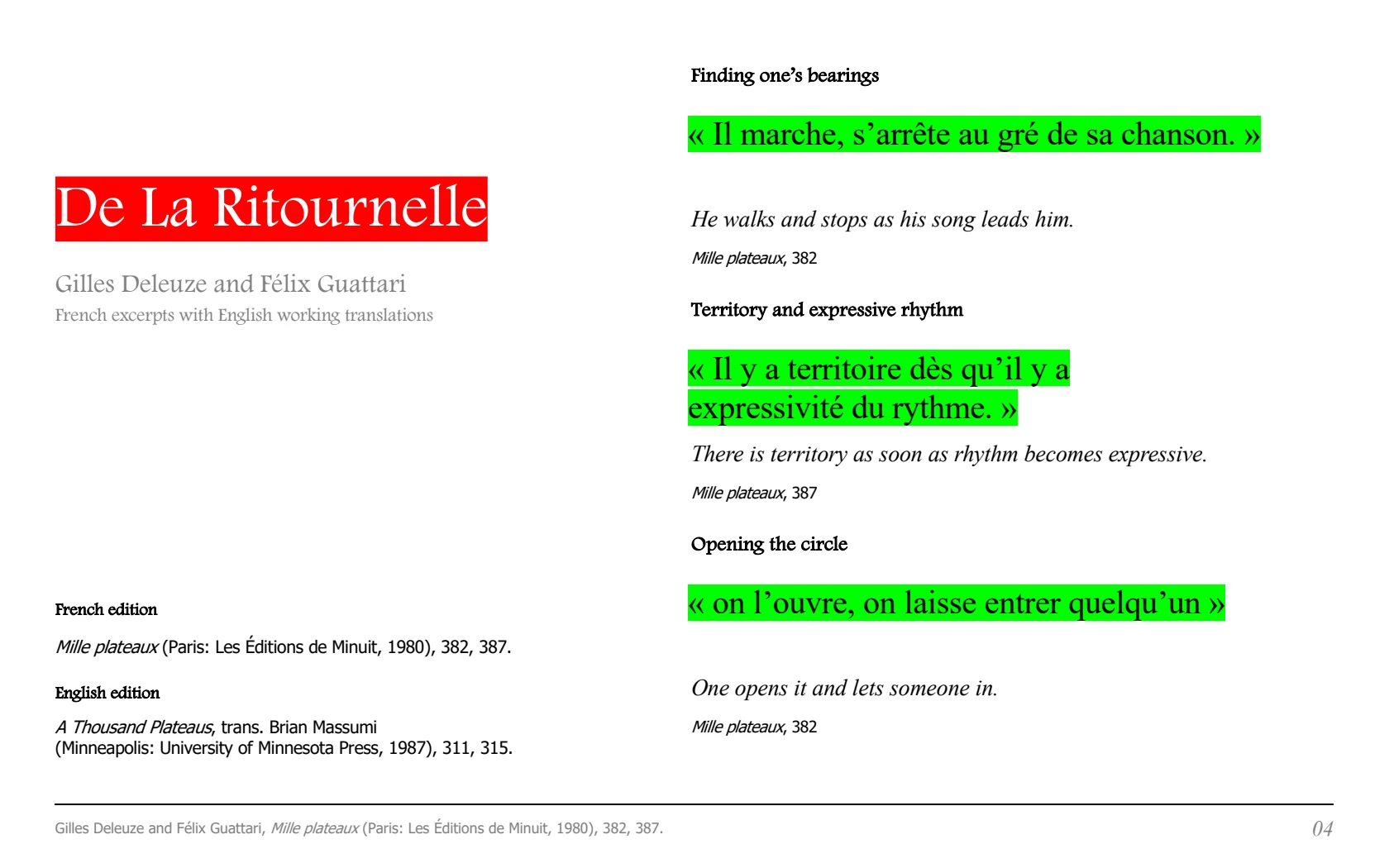
三处引文对读
« Il marche, s’arrête au gré de sa chanson. » (382)
“He walks and halts to his song.” (311)
他随着歌声走走停停。
« Il y a territoire dès qu’il y a expressivité du rythme. » (387)
“There is a territory when the rhythm has expressiveness.” (315)
节奏一旦具备表现力,领地就形成了。
« on laisse entrer quelqu’un » (382)
“one opens the circle a crack … lets someone in” (311)
让人进来。
版本
- Gilles Deleuze and Félix Guattari, “1837 — De la ritournelle,” in Mille plateaux (Les Éditions de Minuit, 1980), 381–433.
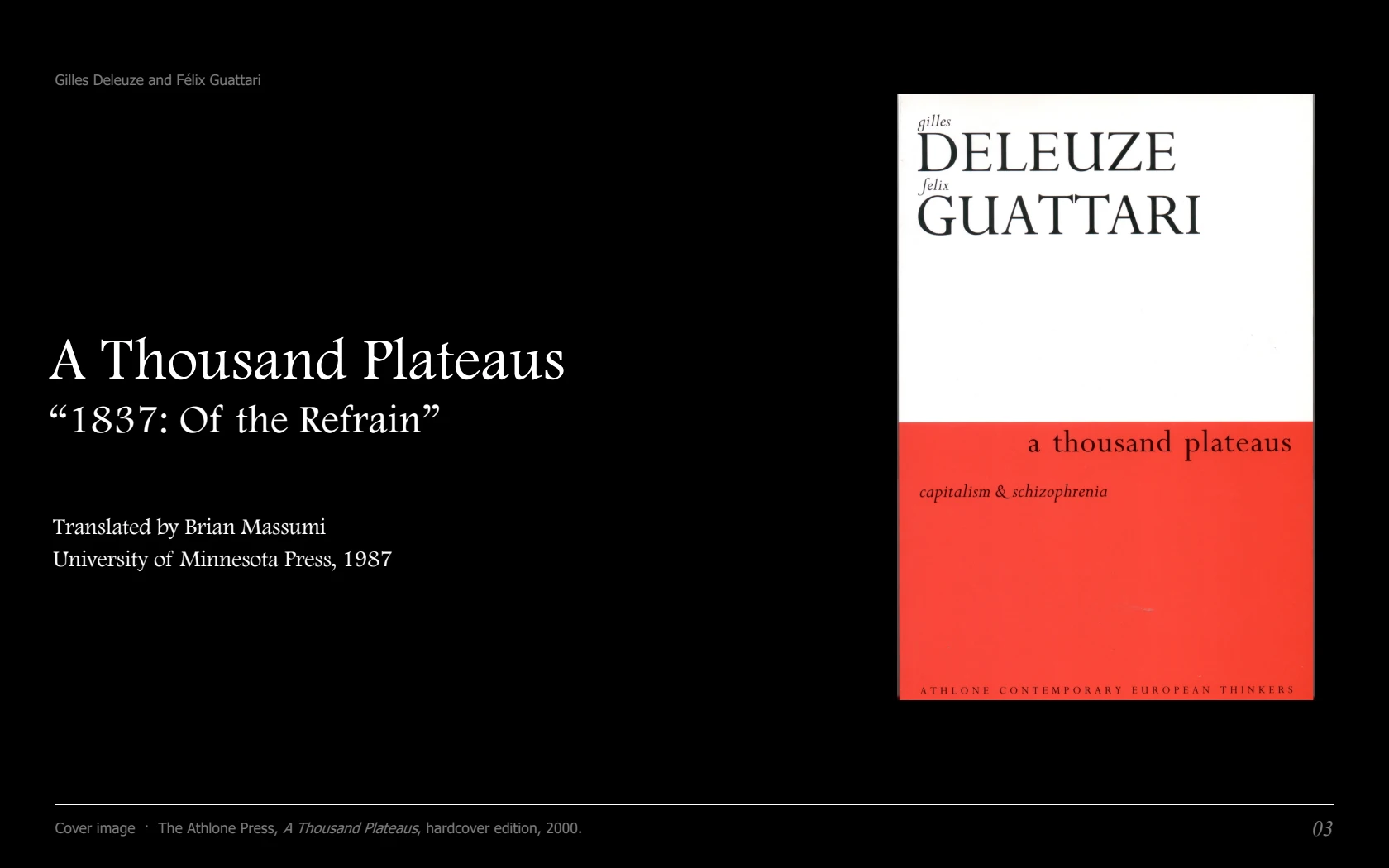
- Gilles Deleuze and Félix Guattari, “1837: Of the Refrain,” in A Thousand Plateaus: Capitalism and Schizophrenia, trans. Brian Massumi (University of Minnesota Press, 1987), 310–350.
逐页查看 27 张幻灯片
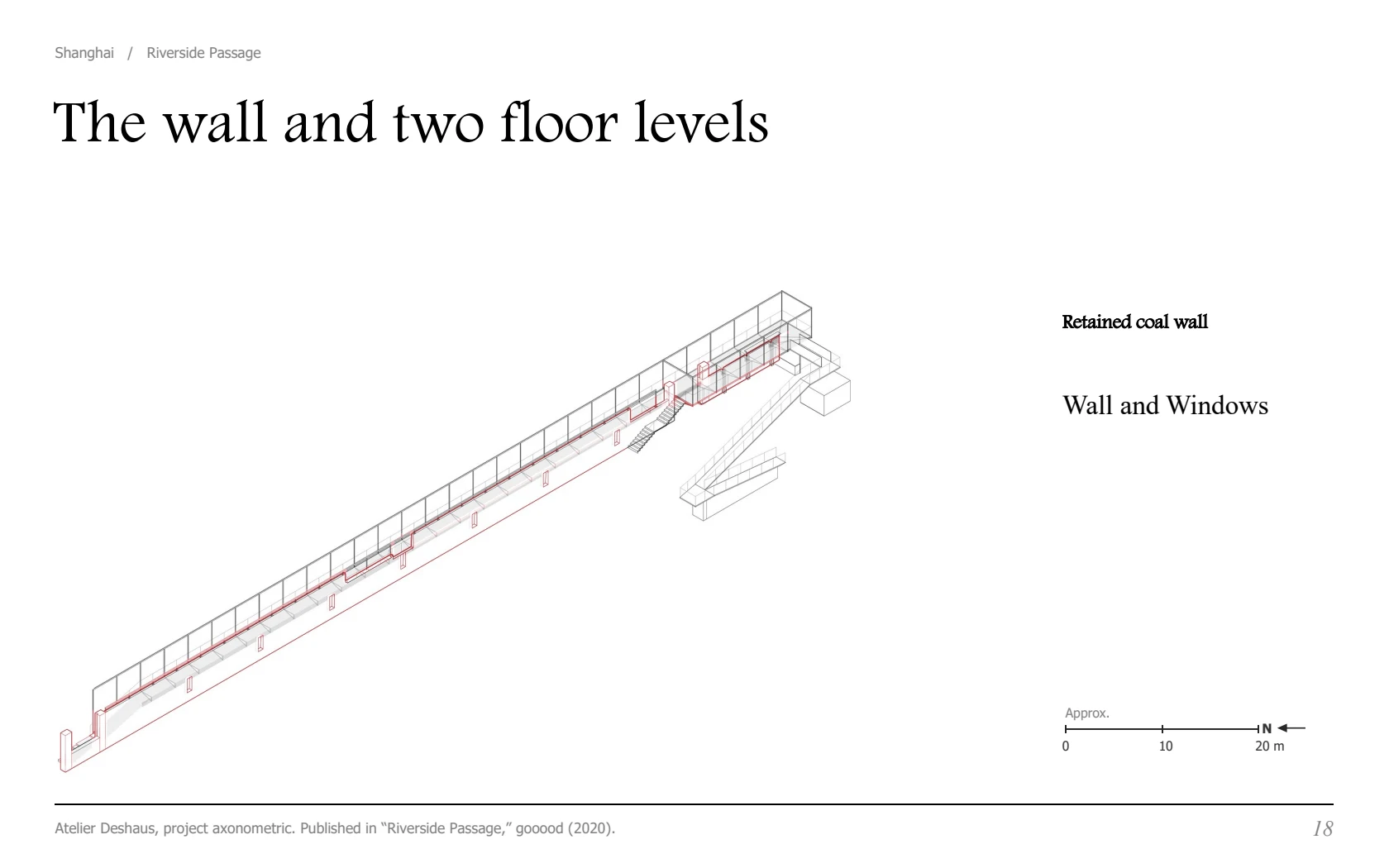
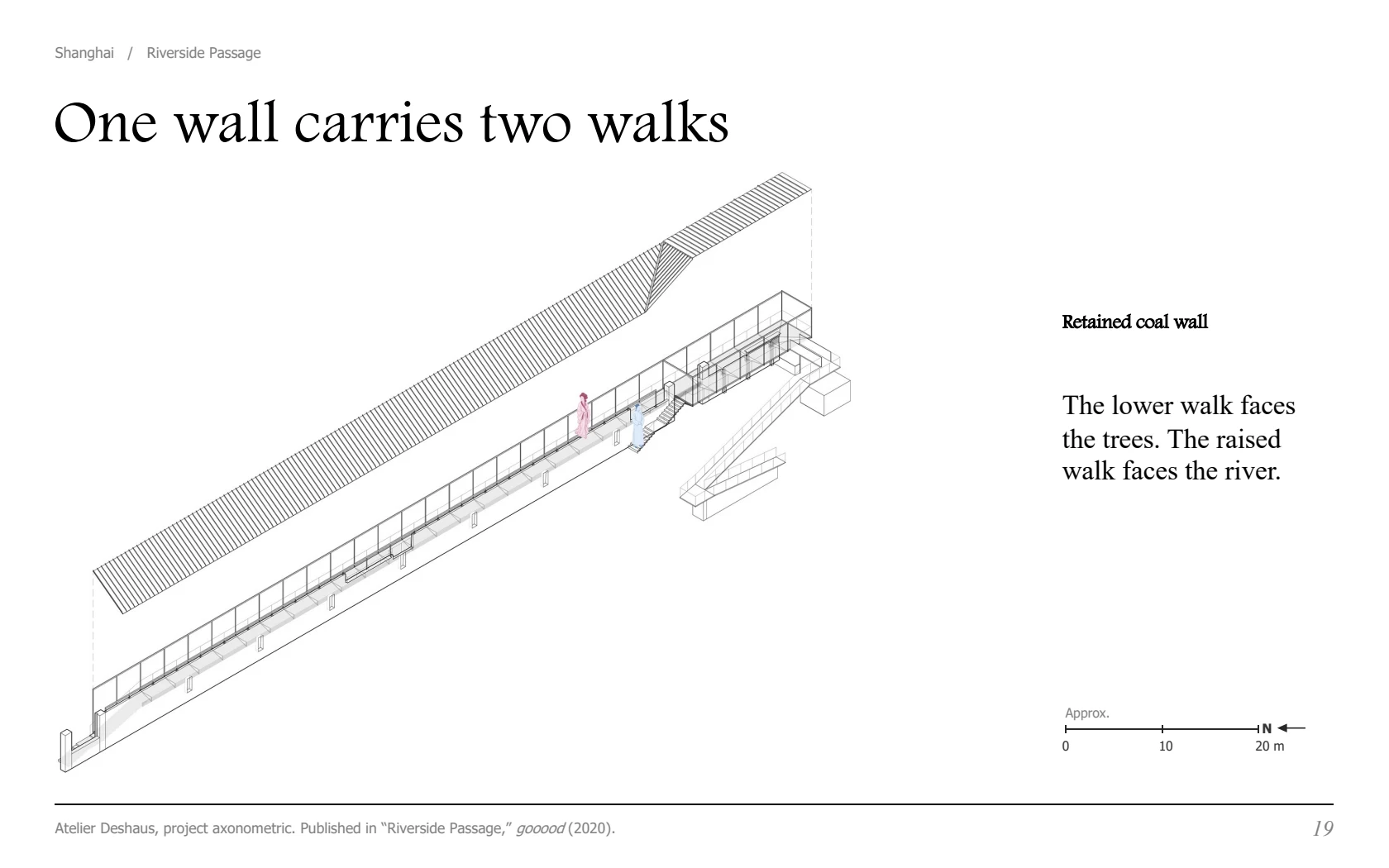
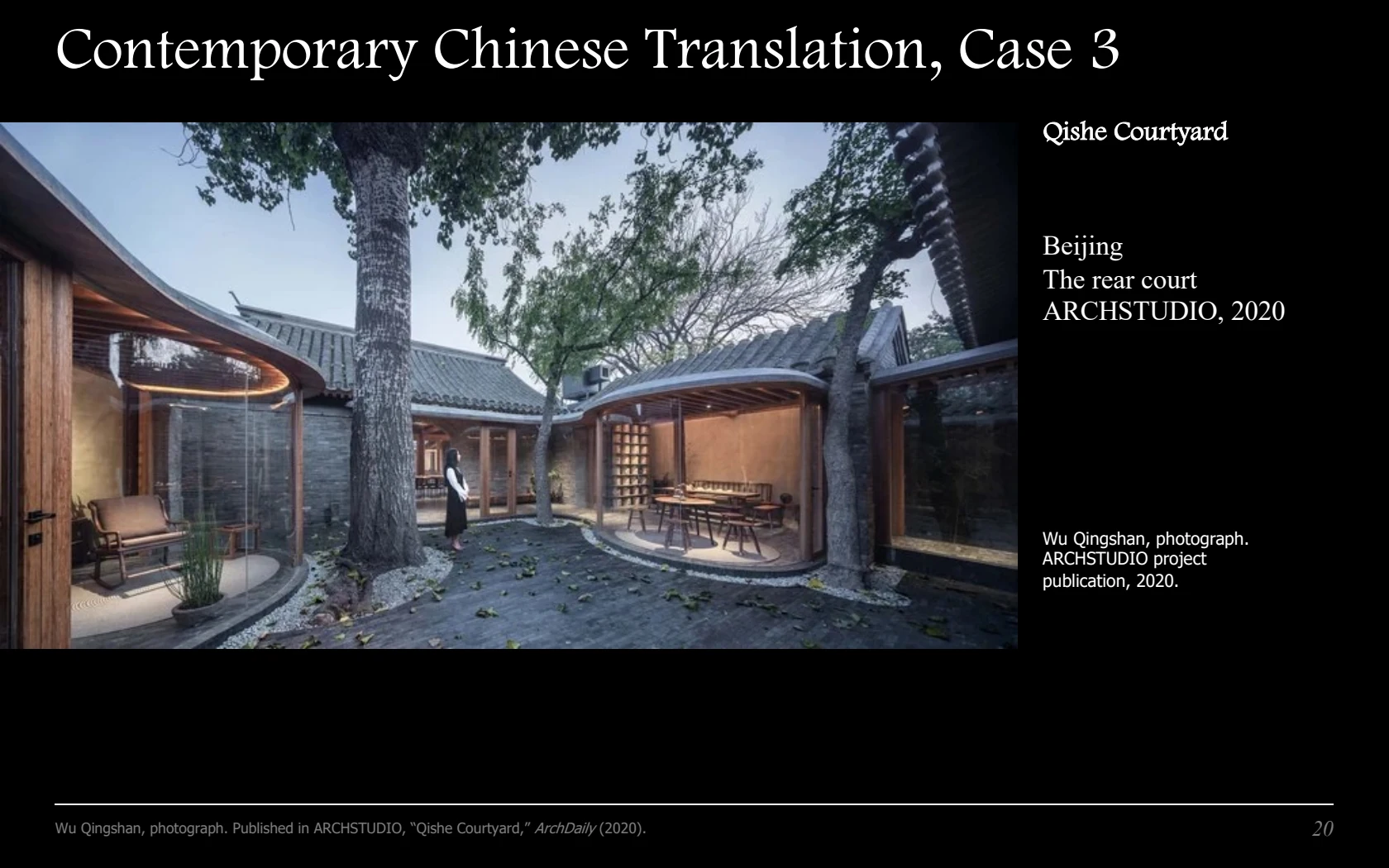
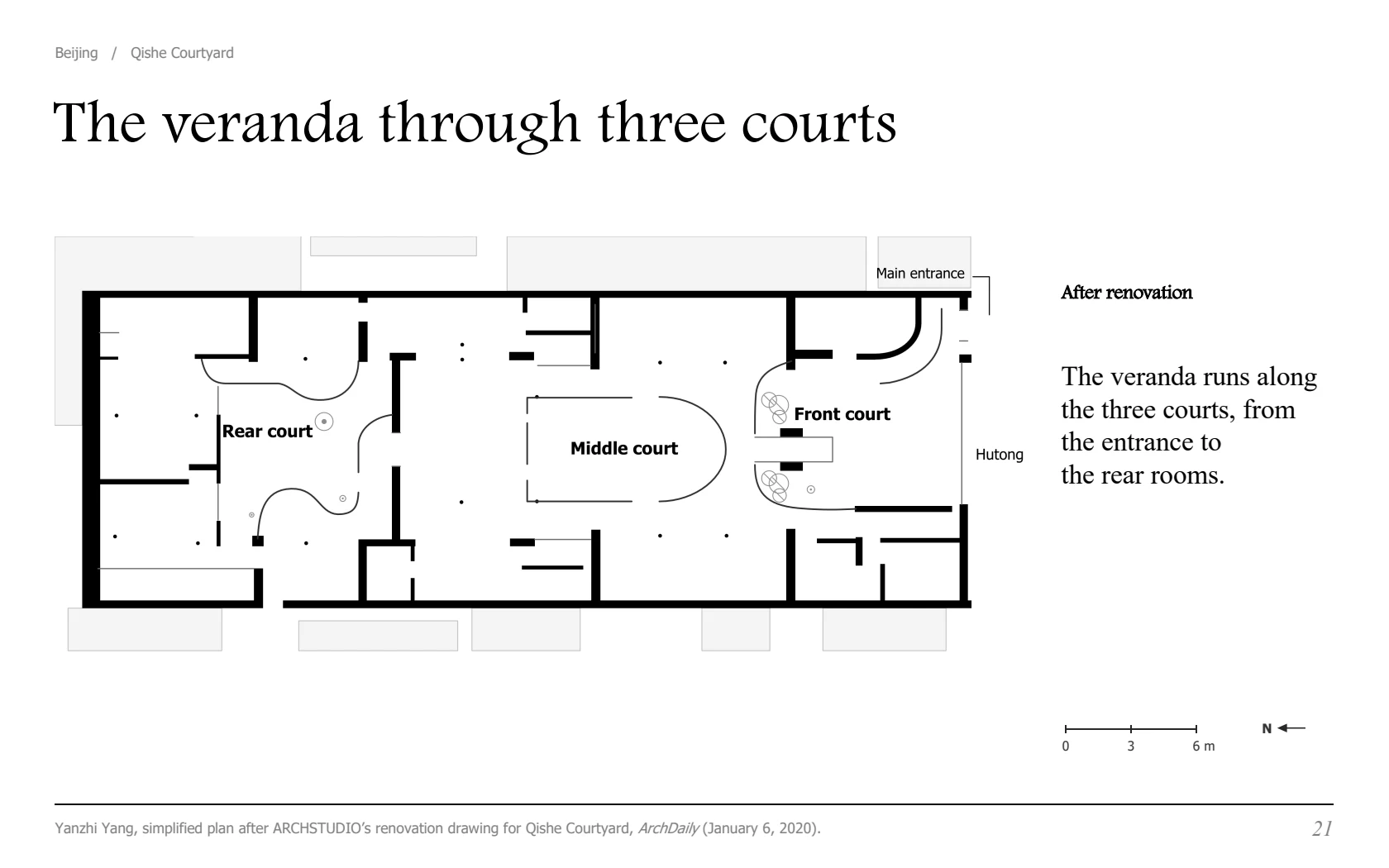
用解构读古典园林:空间知识怎样传承
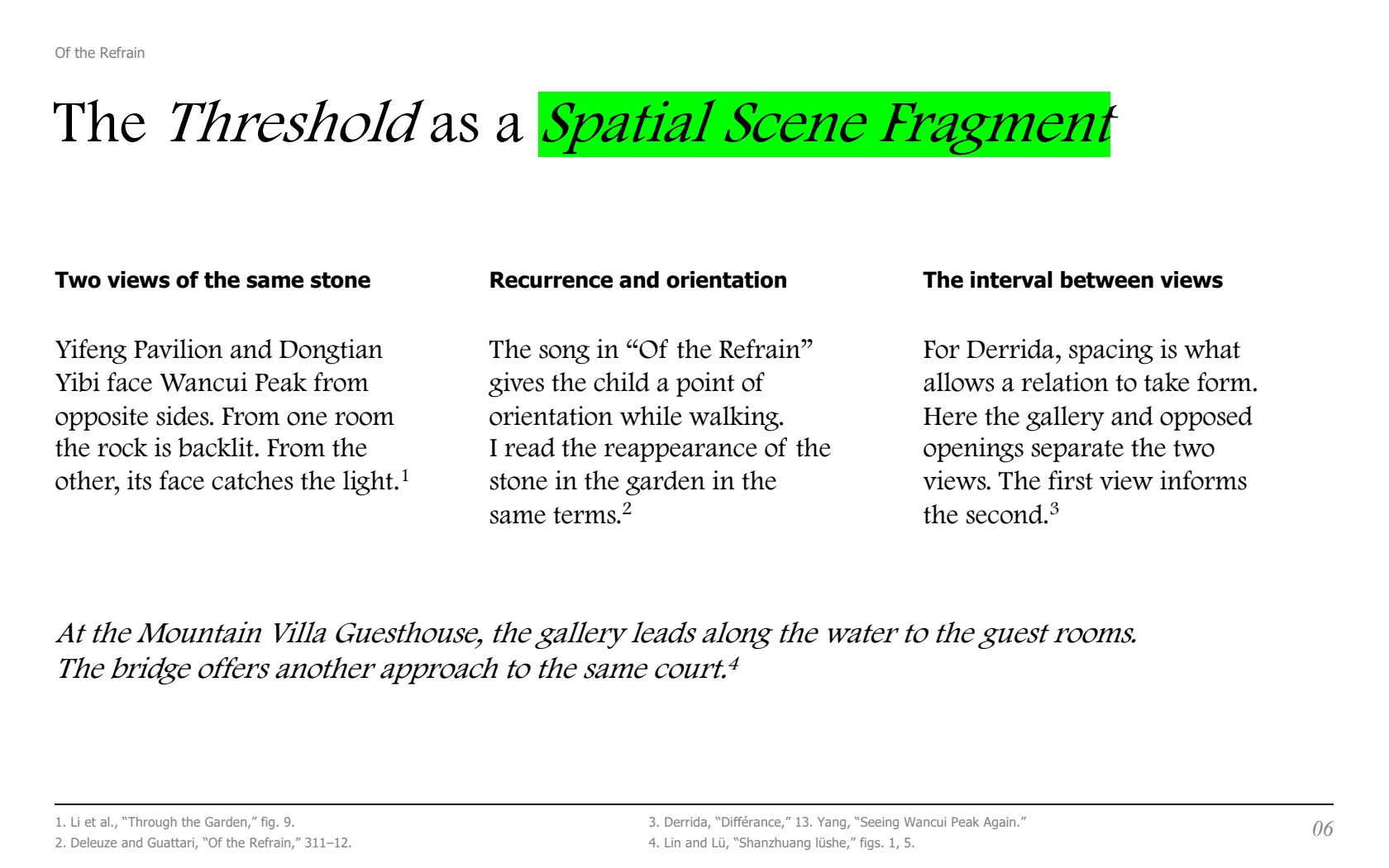
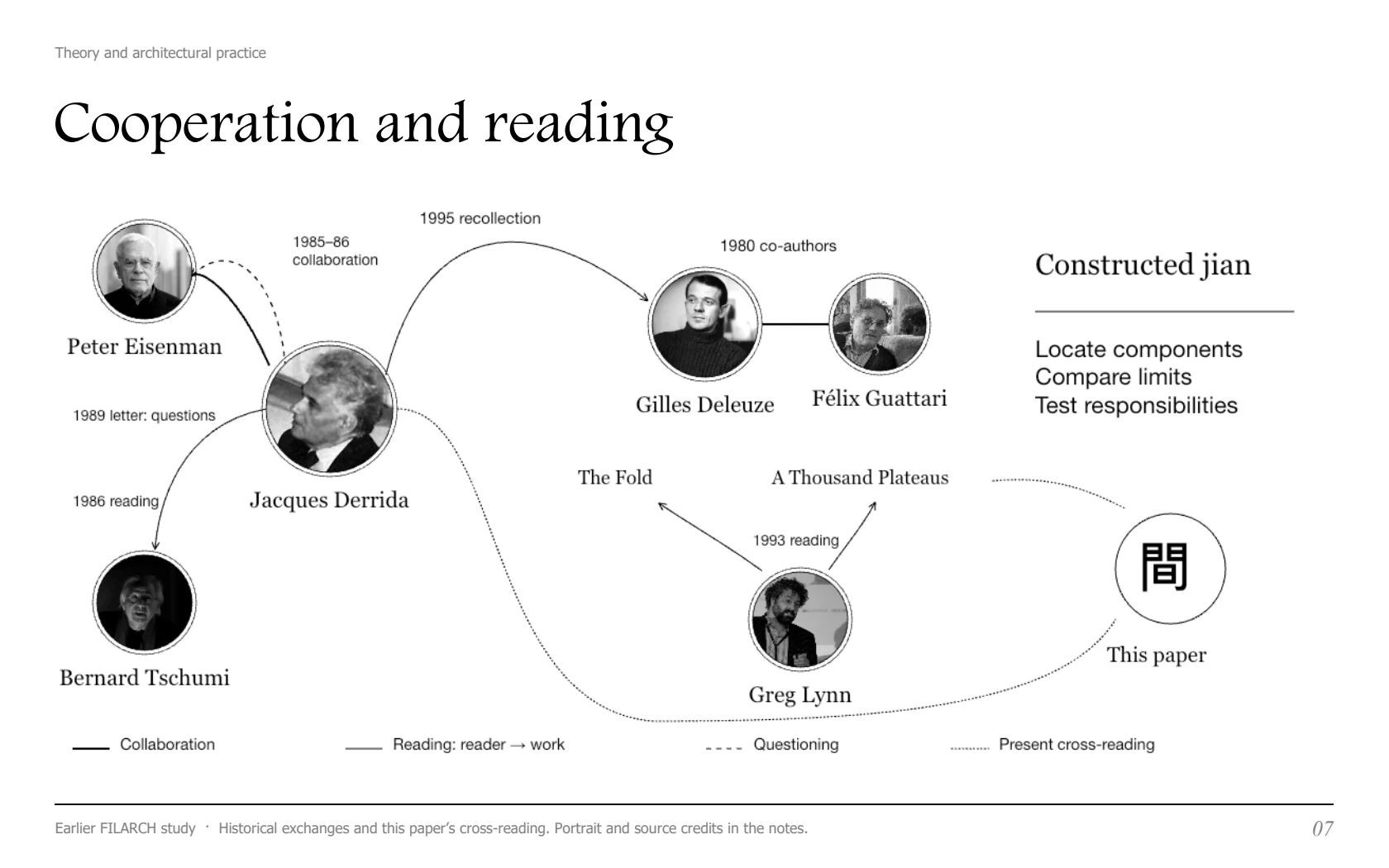
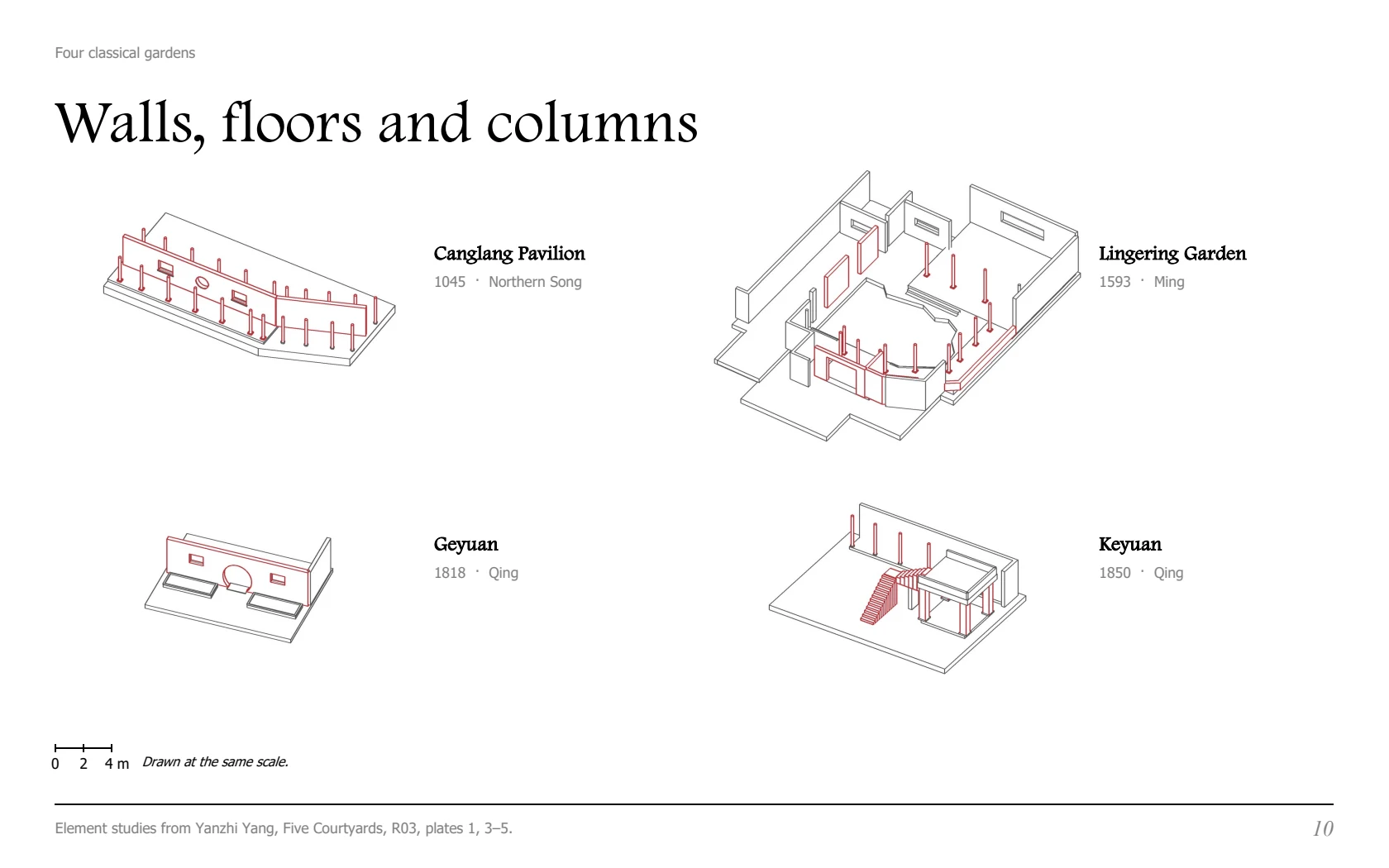
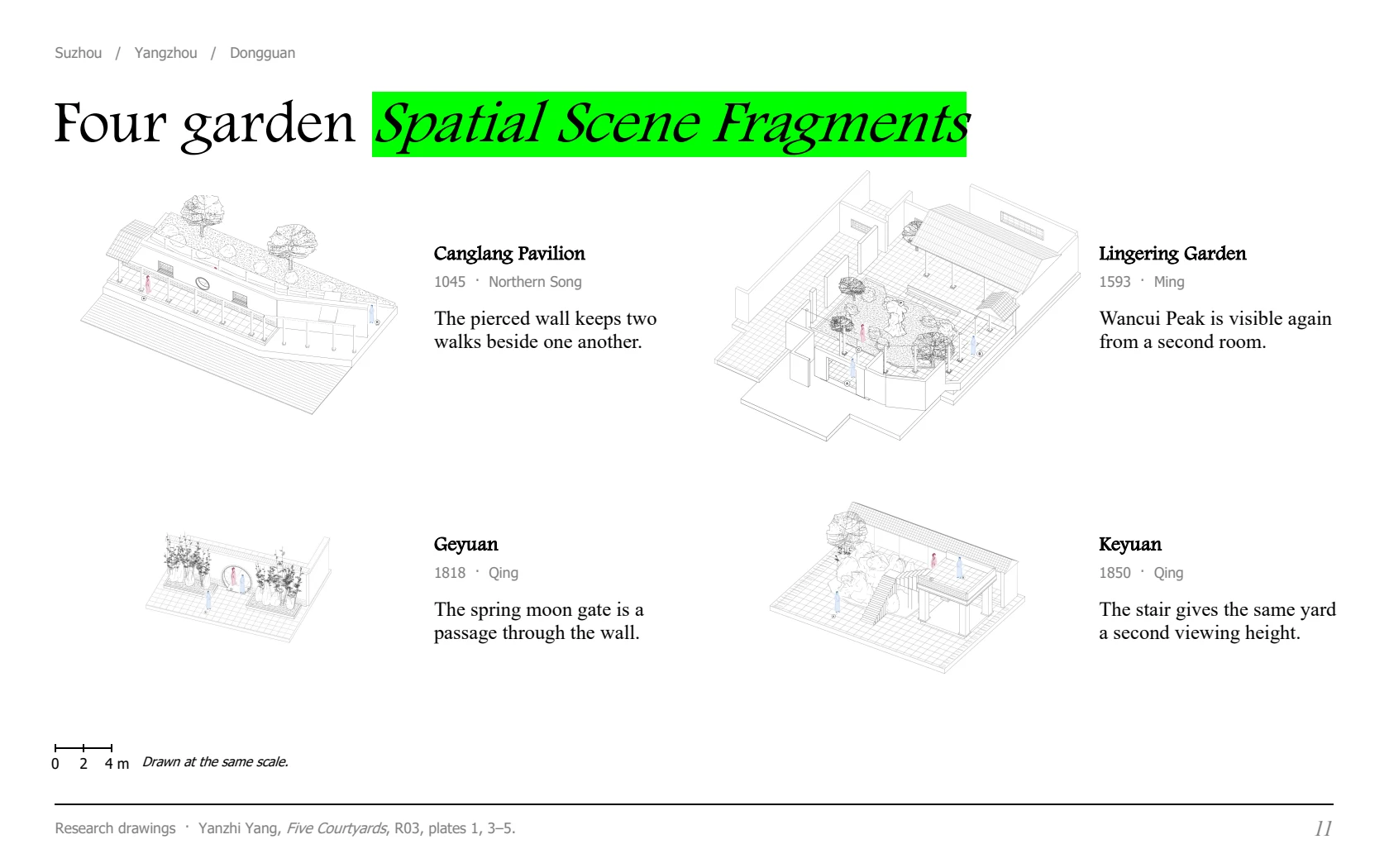
在园林图纸上,可以分别标出人能走到的地方和能看见的景物。沿廊走时,一道墙可能截住视线,转过弯,同一景物又从另一个开口入眼。德里达在〈延异〉中对间隔的讨论,有助于理解前后两处位置怎样通过行走联系起来。德勒兹和瓜塔里的回旋曲把注意力引向景物再次出现的时机。人在不同位置认出同一处景物,便有了重新辨认方向的参照。1, 2
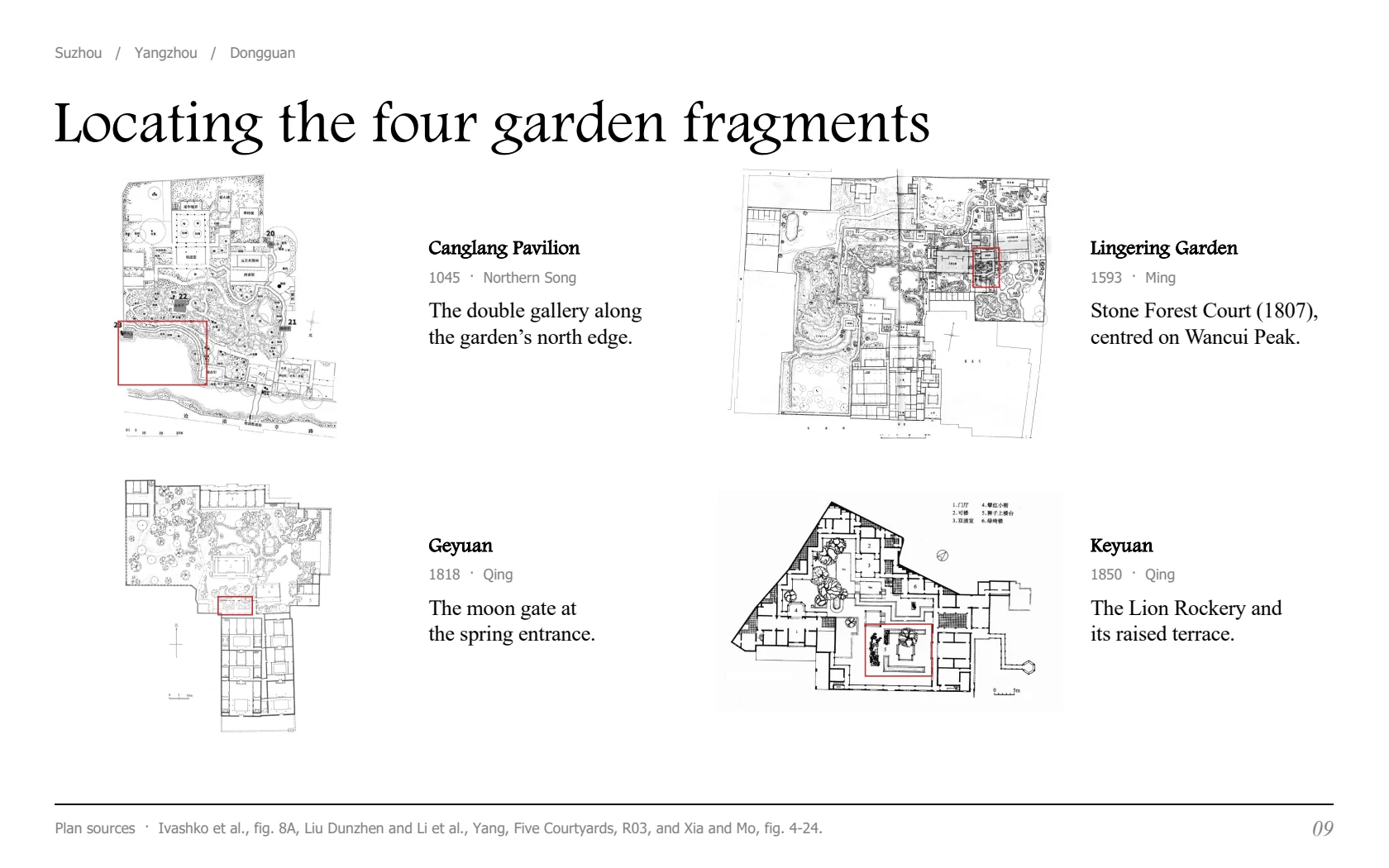
沧浪亭北侧的复廊沿水展开,中间一道墙把两边的步道分开。漏窗让视线穿过中墙,把园外的水面和园内的山石带入沿廊的游程。留园石林小院的图纸标出了两处能看见晚翠峰的位置。两处之间,墙面和廊道的转折改变了视线。沿路标出石峰从哪里消失、又从哪里出现,可以比较两个位置各自取到的景。3, 4, 5
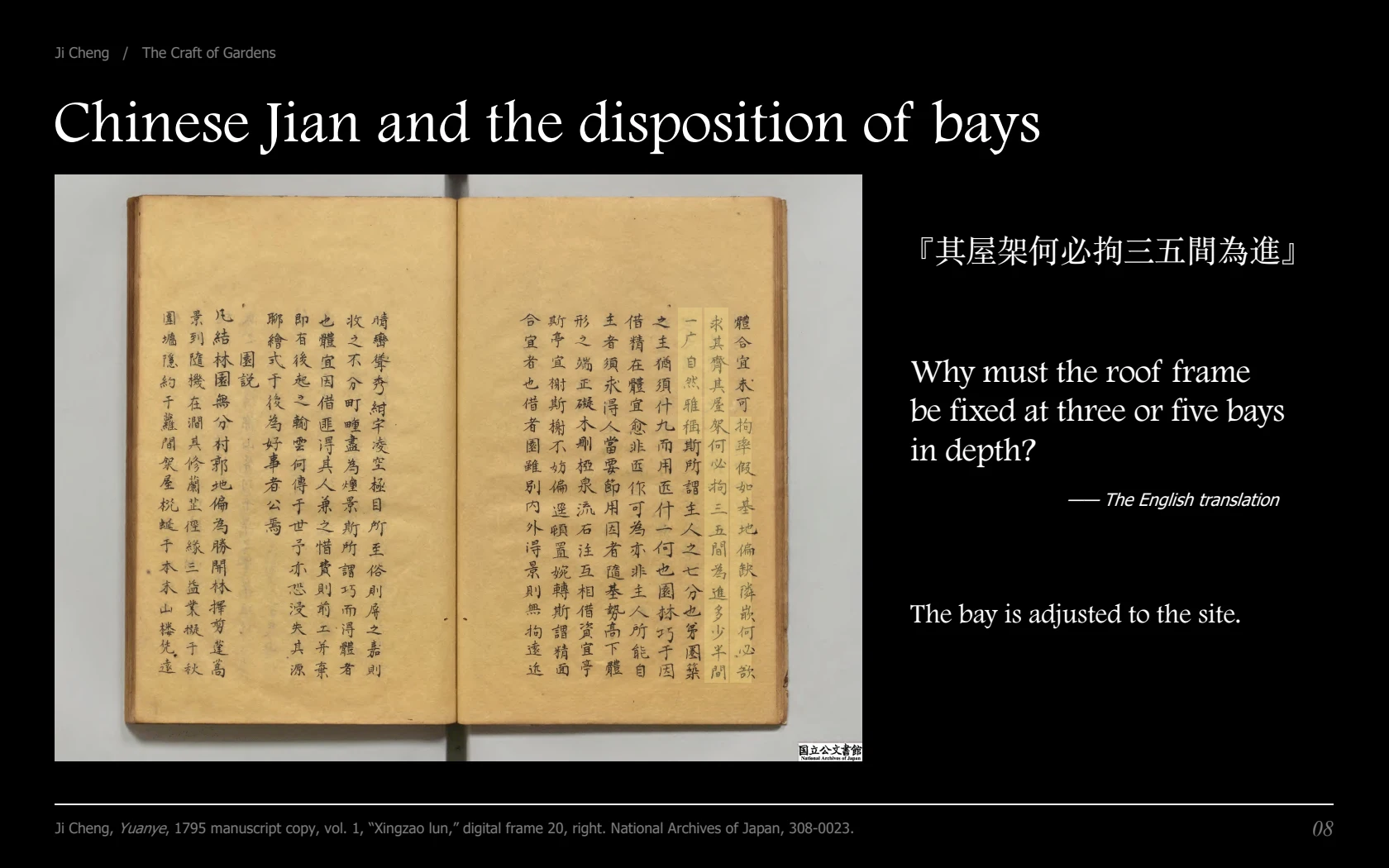
计成在《园冶》〈兴造论〉里把借景与园界放在一起讲。视线可以越过墙垣,园子的布置依然要决定什么景物收入眼中,什么景物应当遮去。1932 年中国营造学社重刊《园冶》,陈植的修订注本和阿利森·哈迪的英译本均于 1988 年出版。后来的读者从这些版本里读到计成怎样谈收景与屏景。再与测绘图对读,文字里的取舍便有了具体所指,包括人的站位、开窗的位置和墙面遮蔽的范围。6, 7, 8
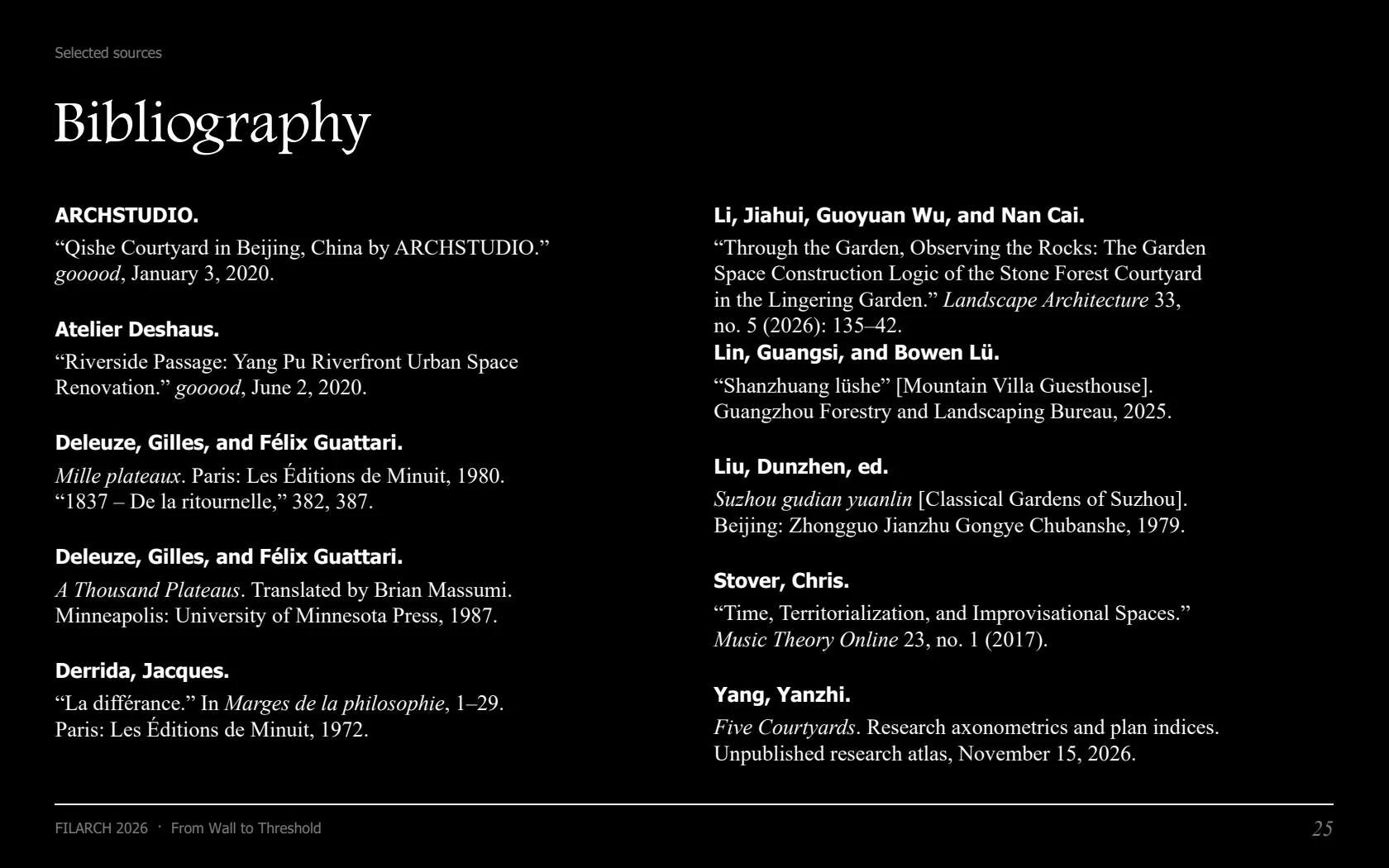
参考文献
- Jacques Derrida, “Différance,” in Margins of Philosophy, trans. Alan Bass (University of Chicago Press, 1982), 13. 原文
- Deleuze and Guattari, “Of the Refrain,” 311–15.
- ICOMOS, Suzhou (China), No. 813bis (2000), “Canglang Pavilion.” UNESCO World Heritage Centre
- Li Jiahui, Wu Guoyuan, and Cai Nan, “Through the Garden, Observing the Rocks: The Garden Space Construction Logic of the Stone Forest Courtyard in the Lingering Garden,” Landscape Architecture 33, no. 5 (2026): 135–42. DOI
- Yanzhi Yang, From Wall to Threshold: A Speculative Architecture of Negotiation, after Derrida and Jian (FILARCH, 2026), 第 11 张幻灯片.
- Ji Cheng 計成, Yuanye 園冶 (Society for the Study of Chinese Architecture, 1932), vol. 1, “Xingzao lun” 興造論. 中国美术学院图书馆
- Ji Cheng 計成, Yuanye zhushi 園冶注釋, annotated by Chen Zhi 陳植, 2nd ed. (China Architecture & Building Press, 1988). CiNii Books
- Ji Cheng, The Craft of Gardens, trans. Alison Hardie (Yale University Press, 1988). 馆藏记录
01.1阈限过渡与感知
一道门、一处高差、一段檐下空间,都会改变人穿行其间的感受。我的博士研究由这些细部入手,考察过渡空间的安排与体验。
01.2间空间与译介
中国的古典空间概念「间」既涉及空间的分隔,也涉及其间的联系。我将它与「阈限」并置考察,留意两者在不同语言和建筑脉络中的含义,寻找可相互参照之处。
01.3绘图以图求解
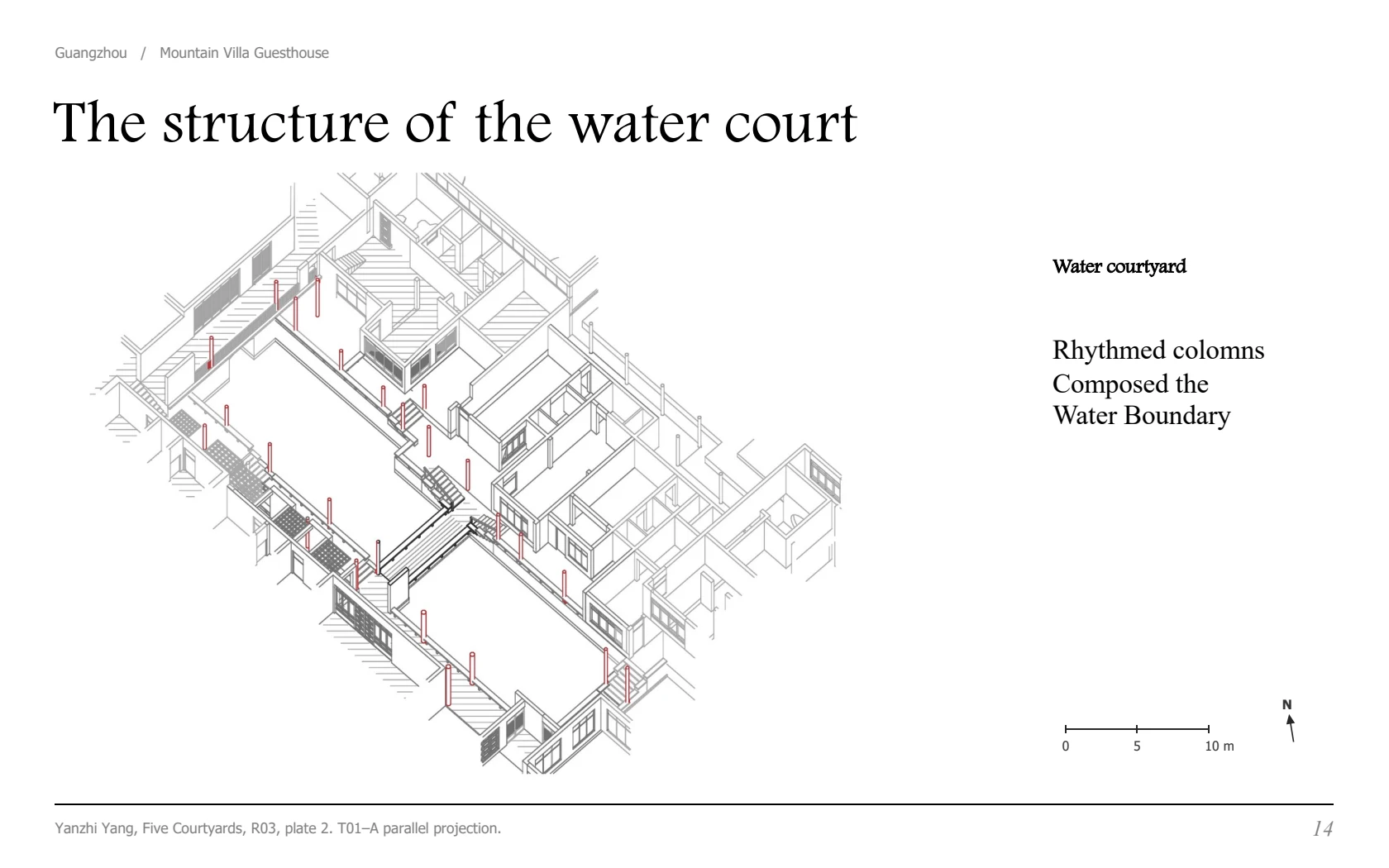
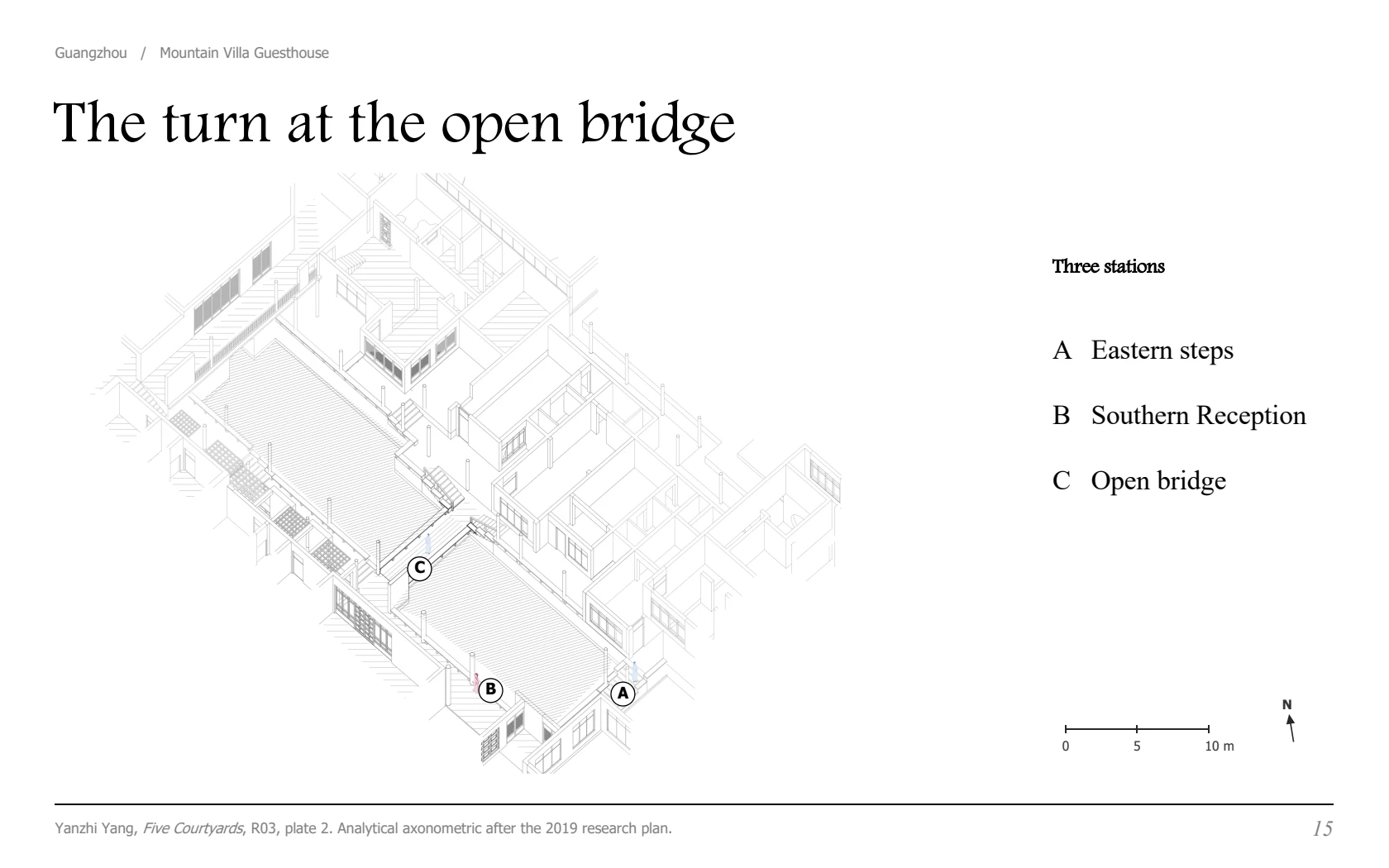
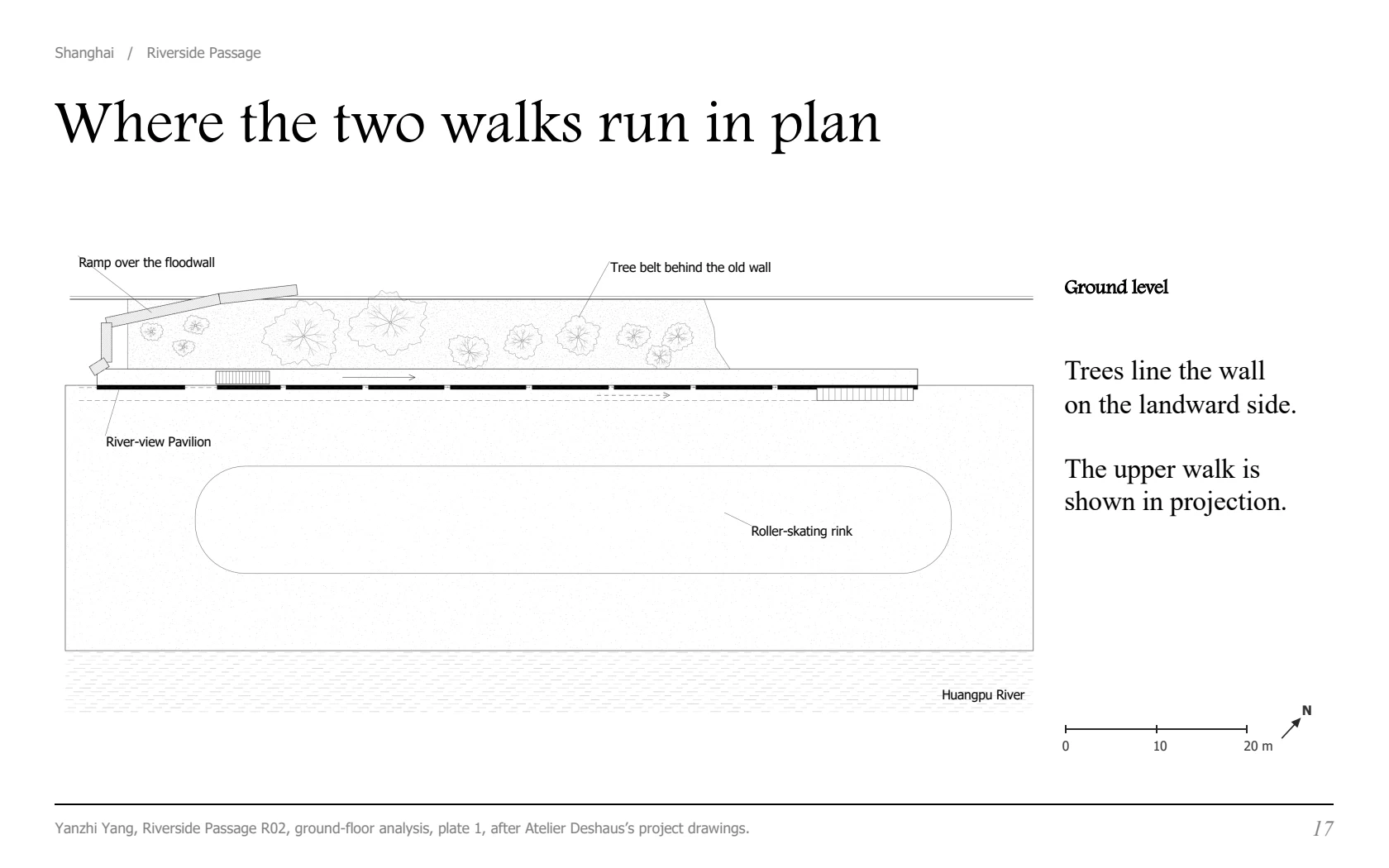
把建筑画下来,空间关系便能逐一比较。配合文字,图纸让门洞、路径、围合与间距之间的关系更为清楚。
返回空间图示